

Passport to World Arts:
Using Creativity to Build Cultural Understanding
Curriculum design.
Experiential learning.
Global citizenship.
Passport to World Arts was Induz’s signature multicultural arts education program. I created the curriculum to make arts learning more accessible while introducing children to countries, traditions, stories, and creative practices from around the world. The program combined visual art, music, movement, storytelling, geography, and cultural exploration in a gamified learning journey designed for schools, libraries, YMCA after-school programs, and community organizations.


Multiple learning settings
Schools · Libraries · YMCA programs · Community organizations
Global cultural learning
Countries, traditions, geography, and creative practices


Multidisciplinary curriculum

Visual art · Music · Movement · Storytelling
Award-recognized program
Recognized through YMCA after-school programming
Program in Practice
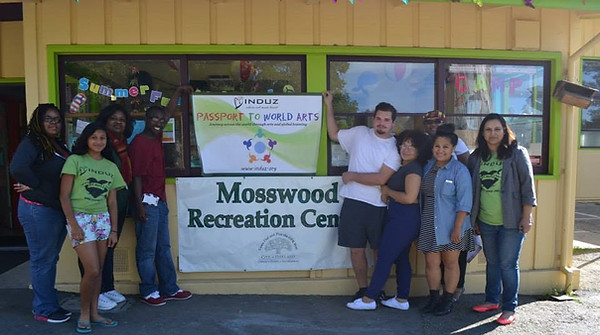
United States School and After-School Programs
Children explored global cultures through structured arts activities delivered through schools, libraries, YMCA programs, and community partnerships.

THE CHALLENGE
Arts education plays an important role in a child’s creativity, confidence, communication, and social development. Yet access is often limited by school budgets, geography, and a family’s ability to pay for private enrichment. Cultural education can be similarly fragmented. Children may learn about another country only through a single holiday, food, or simplified classroom activity, without understanding the people, history, stories, and artistic traditions behind it. The challenge was to create a program that made both arts education and cultural learning accessible, engaging, and practical for organizations with limited time and resources.
THE SOLUTION
Passport to World Arts transformed cultural learning into an imaginative journey. Children received a passport-inspired experience that allowed them to “travel” to different countries through creative activities. Each destination introduced artistic traditions alongside geography, storytelling, music, movement, and cultural context. Rather than teaching art techniques in isolation, the curriculum connected each creative activity to the culture and community from which it came.
My Role
Curriculum Creator & Program Strategist
I developed Passport to World Arts from concept through implementation and expansion.
My responsibilities included:
Defining the curriculum vision and learning objectives
Researching countries, cultures, and artistic traditions
Designing multidisciplinary lesson plans
Creating the passport-inspired learning format
Adapting lessons for different ages and settings
Developing facilitator and volunteer resources
Building partnerships with schools and after-school programs
Training and coordinating educators and volunteers
Supporting program delivery and quality
Positioning and communicating the program to partners

IMPACT & RESULTS
Created a repeatable multicultural arts curriculumExpanded access to arts enrichment in lower-income schools and communities
-
Delivered programming through schools, libraries, YMCA programs, and nonprofit partners
-
Introduced children to multiple artistic disciplines
-
Connected creativity with geography, history, storytelling, and cultural learning
-
Developed facilitator materials that supported consistent delivery
-
Adapted the curriculum for different ages and learning settings
-
Encouraged curiosity, participation, empathy, and cultural awareness
-
Recognized through YMCA after-school programming.
WHAT THIS WORK DEMONSTRATES
Curriculum Strategy
-
Translated a broad educational mission into a structured and repeatable learning experience.
-
Program Design
-
Created a model that balanced educational depth, practical delivery, and child engagement.
-
Cultural Literacy
-
Developed programming that introduced cultural differences with context and respect.
-
Experiential Learning
-
Used creativity, movement, stories, and participation to make learning memorable.
-
Gamification
-
Applied a passport and travel concept to create progress, anticipation, and discovery without allowing the game to overshadow the educational purpose.
-
Adaptability
-
Designed lessons that could work across schools, libraries, after-school programs, and international community settings.
-
Partnership Enablement
-
Created a program that external organizations could understand, adopt, and deliver within their own environments.
LEADERSHIP TAKEAWAY
Children do not need to travel across the world to begin understanding it. Thoughtful curriculum can bring the world into the room.